
G.D. Hancock, Ph.D.
Contact
Media and interview requests, speaking, policy inquiries — and where to turn if this is happening in your family.
Get in touch
- Title Professor Emerita of Finance, Anheuser-Busch College of Business, University of Missouri–St. Louis
- Emailgdweise@hancockonaddiction.org
- Phone850-712-2034
- Location Gulf Coast, Florida
Who to contact about what
- Media and interviews
- Email with the outlet, the topic and your deadline. She takes both in-person and remote interviews. Press materials are below.
- Speaking
- Conferences, panels and university talks.
- Policy and research
Legislative staff, defence lawyers and researchers. Four papers bear directly on drug-induced homicide prosecutions:
- The Illusion of Victimhood in Overdose Deaths Charleston Law Review, forthcoming Fall 2026
- The Myth of the Addict-Dealer Journal of Law & Policy, forthcoming December 2026
- Punishing Addiction: Criminalization as the Nation’s De Facto Drug Policy Journal of Criminology, under review
- For a Motive of Kindness…20 years in Federal Prison Novel Research in Sciences, vol. 13, no. 3, February 2023, pp. 1–12
All of her work is listed on the research page.
- If your family is going through this
- She reads what is sent to her, but she is one person and not a lawyer. The organizations on the organizations page include groups that work directly with affected families and can respond faster.
Send a message
Press kit
The Criminalization of Addiction: One Family’s Fight Against Mandatory Minimums in the Opioid Crisis is an account of a prosecution: Scott Hancock is serving twenty years in federal prison for sharing fentanyl with a friend who died. His mother, a financial economist, spent the years after his sentencing studying the law that put him there. The book sets one family’s case against the evidence on drug-induced homicide statutes and mandatory minimums.
Images
 Author portraitWebP, 1200×1600
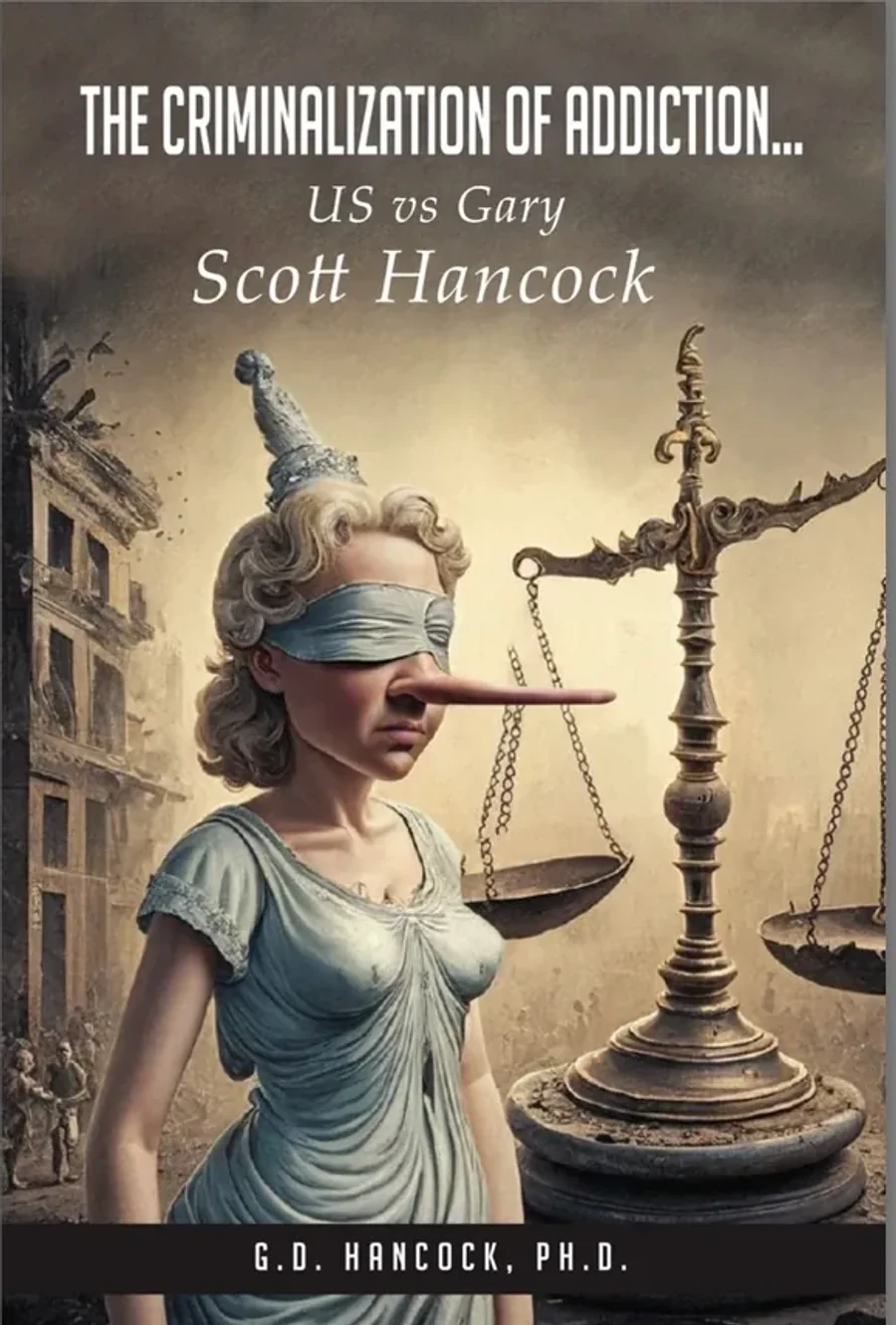 Front coverWebP, 900×1331
Higher-resolution files for print are available on request.
Book
- Title
- The Criminalization of Addiction: One Family’s Fight Against Mandatory Minimums in the Opioid Crisis
- Author
- G.D. Hancock, Ph.D.
- Ebook
- Kindle, October 2025
- Paperback
- The Criminalization of Addiction: The US vs Gary Scott Hancock Case, September 2025, 262 pages. ISBN 979-8-218-76914-7
- Buy
- Amazon (opens in a new tab)
Reviews
“It’s especially important for lawmakers, medical professionals, and families dealing with addiction.”
Short biography — 50 words
G.D. Hancock, Ph.D., is a financial economist and Professor Emerita who spent three decades teaching and publishing in finance. After her son was prosecuted under federal drug-induced homicide law and sentenced to twenty years, she turned to studying how the United States criminalizes addiction.
Long biography — 200 words
G.D. Hancock, Ph.D., earned four degrees in finance and economics and began her academic career at the University of Missouri in 1988, earning tenure in 1994 and retiring as Professor Emerita after more than three decades of teaching and publishing. In 2019 her son, Scott, was arrested and later prosecuted under federal drug-induced homicide law; only then did she learn the extent of his opioid addiction, which had begun at age sixteen following a legitimate prescription. He was sentenced to a mandatory twenty-year federal prison term. Determined to understand how addictive behavior could be treated as homicidal behavior, she retired early and turned to criminal drug law, federal sentencing, addiction science and the medical evidence surrounding substance use disorders. What began as a mother’s search for answers became a scholarly investigation of the criminalization of addiction in the United States. She was diagnosed with Stage III esophageal cancer while completing the work and continued it through treatment. She has been named one of Florida’s Most Influential Women for her contributions to criminal justice reform, and writes, speaks and advocates for evidence-based drug policy and sentencing reform.
Suggested interview questions
- Drug-induced homicide statutes convict without proving intent to kill. How did that become acceptable in American law?
- You spent thirty years in finance. What did that training let you see in these prosecutions that a legal scholar might miss?
- Prosecutors describe these laws as a tool against dealers. Who is actually being charged?
- What would you say to a family whose child has just been charged under one of these statutes?